





Matthew Lieberman
- Media Contact
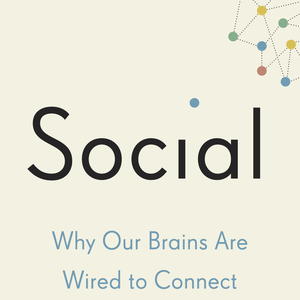
My research focuses on social cognitive neuroscience and uses neuroimaging (fMRI) to examine how we make sense of others, ourselves, and the relation between these. More specifically we focus on mentalizing, persuasion and the spread of ideas, empathy, emotion regulation, and self-knowledge. We also focus on the applications of these findings for education, business, and other organizations. For an overview, see my book "Social: Why Our Brains Are Wired to Connect".
Primary Interests:
- Attitudes and Beliefs
- Emotion, Mood, Affect
- Helping, Prosocial Behavior
- Neuroscience, Psychophysiology
- Person Perception
- Persuasion, Social Influence
- Self and Identity
- Social Cognition
Research Group or Laboratory:
Note from the Network: The holder of this profile has certified having all necessary rights, licenses, and authorization to post the files listed below. Visitors are welcome to copy or use any files for noncommercial or journalistic purposes provided they credit the profile holder and cite this page as the source.
Image Gallery
Video Gallery

The Social Brain and Its Superpowers (TEDx talk)
Select video to watch
-
17:58 The Social Brain and Its Superpowers (TEDx talk)
Length: 17:58
-
1:02:52 The Social Brain and the Workplace (Google talk)
Length: 1:02:52
-
24:14 Making "Social" a Superpower in the Classroom (RSA)
Length: 24:14
-
2:48 On the Surprising Neuroscience of Emotional Pain (Oxford Academic)
Length: 2:48
-
22:28 How Many Friends Do You Really Need? (Oxford Academic)
Length: 22:28
Additional Videos
Other Files
Books:
-
Lieberman, M. D. (2013). Social: Why our brains are wired to connect. New York: Crown.
- Linked image: Book cover of Social
Journal Articles:
- Berkman, E. T., Falk, E. B., & Lieberman, M. D. (2011). In the trenches of real-world self-control: Neural correlates of breaking the link between craving and smoking. Psychological Science, 22, 498-506 .
- Eisenberger, N. I., Lieberman, M. D., & Williams, K. D. (2003). Does rejection hurt? An fMRI study of social exclusion. Science, 302, 290-292.
- Falk, E. B., Morelli, S. A., Welbourn, B. L., Dambacher, K., & Lieberman, M. D. (2013). Creating buzz: The neural correlates of effective message propagation. Psychological Science, 24(7), 1234-1242.
- Lieberman, M. D. (2007). Social cognitive neuroscience: A review of core processes. Annual Review of Psychology, 58, 259-289.
- Lieberman, M. D. (2012). Education and the social brain. Trends in Neuroscience and Education, 1 3-9.
- Lieberman, M. D. (2000). Intuition: A social cognitive neuroscience approach. Psychological Bulletin, 126, 109-137.
- Lieberman, M. D., Eisengerger, N. I., Crockett, M. J., Tom, S. M., Pfeifer, J. H., & Way, B. M. (2007). Putting feelings into words: Affect labeling disrupts amygdala activity in response to affective stimuli. Psychological Science, 18(5), 421-428.
- Lieberman, M. D., Gaunt, R., Gilbert, D. T., & Trope, Y. (2002). Reflexion and reflection: A social cognitive neuroscience approach to attributional inference. Advances in Experimental Social Psychology, 34, 199-249.
- Lieberman, M. D., Hariri, A., Jarcho, J. J., Eisenberger, N. I., & Bookheimer, S. Y. (2005). An fMRI investigation of race-related amygdala activity in African-American and Caucasian-American individuals. Nature Neuroscience, 8, 720-722.
- Lieberman, M. D., Inagaki, T. K., Tabibnia, G., & Crockett, M. J. (2011). Subjective responses to emotional stimuli during labeling, reappraisal, and distraction. Emotion, 11, 468-480.
- Lieberman, M. D., Jarcho, J. M., & Satpute, A. B. (2004). Evidence-based and intuition-based self-knowledge: An fMRI study. Journal of Personality and Social Psychology, 87, 421-435.
- Lieberman, M. D., Ochsner, K. N., Gilbert, D. T., & Schacter, D. L. (2001). Do amnesics exhibit cognitive dissonance reduction? The role of explicit memory and attention in attitude change. Psychological Science, 12, 135-140.
- Meyer, M. L., Spunt, R. P., Berkman, E. T., Taylor, S. E., & Lieberman, M. D. (2012). Evidence for social working memory from a parametric functional MRI study. Proceedings of the National Academy of Sciences, 109, 1883-1888.
- Morelli, S. A., Rameson, L. T., & Lieberman, M. D. (in press). The neural components of empathy: Predicting daily prosocial behavior. Social Cognitive and Affective Neuroscience.
- Ochsner, K. N., & Lieberman, M. D. (2001). The emergence of social cognitive neuroscience. American Psychologist, 56, 717-734.
- Pfeifer, J. H., Lieberman, M. D., & Dapretto, M. (2007). "I know you are but what am I?!": Neural bases of self- and social knowledge retrieval in children and adults. Journal of Cognitive Neuroscience, 19(8), 1323-1337.
- Spunt, R. P. & Lieberman, M. D. (2013). The busy social brain: Evidence for automaticity and control in the neural systems supporting social cognition and action understanding. Psychological Science, 24, 80-86.
Courses Taught:
- Honor Seminar
- Introduction to Social Psychology
- Research Methods in Social Psychology
- Social Cognition
- Social Cognitive Neuroscience
Matthew Lieberman
Department of Psychology
Franz Hall, UCLA
405 Hilgard Avenue
Los Angeles, California 90095-1563
United States of America
- Phone: (310) 206-4050
- Fax: (310) 825-9257
